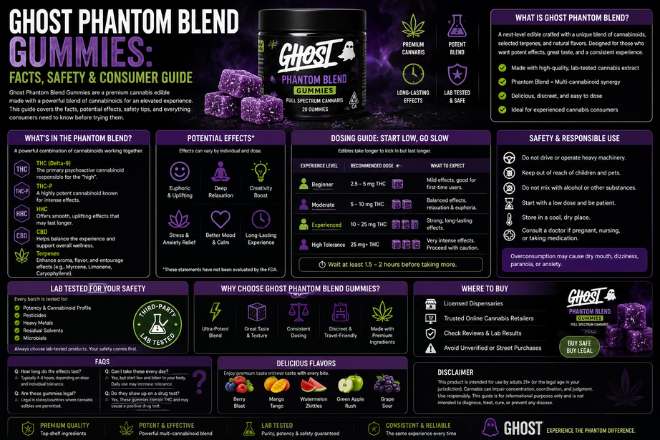
Caramelle gommose Ghost Phantom Blend: informazioni su sicurezza, etichettatura e caratteristiche.
I prodotti a base di cannabis commestibili sono diventati sempre più comuni nelle giurisdizioni in cui la cannabis è legalmente regolamentata. Tra i nomi che compaiono nelle ricerche online c'è Caramelle gommose Ghost Phantom BlendMolte persone cercano questo termine perché vogliono capire cosa siano questi prodotti, se le diverse versioni siano autentiche e cosa significhino effettivamente le etichette sulla confezione.
Questa guida spiega la terminologia relativa alle caramelle gommose Ghost Phantom Blend, risponde alle domande più frequenti sull'etichettatura dei prodotti commestibili e mette in evidenza importanti considerazioni in materia di sicurezza e aspetti legali.
Cosa sono le caramelle gommose Ghost Phantom Blend?
Il termine Caramelle gommose Ghost Phantom Blend In genere si riferisce a un prodotto commestibile a base di cannabis di marca. A seconda del produttore e della giurisdizione, gli ingredienti, il profilo dei cannabinoidi e la confezione possono variare.
A differenza dei prodotti farmaceutici regolamentati, i prodotti alimentari di marca non sono sempre standardizzati tra i diversi produttori. Nomi o confezioni simili non indicano necessariamente che due prodotti siano identici.
Perché se ne parla online?
Questi prodotti attirano l'attenzione per i seguenti motivi:
- Marchio distintivo
- Confezioni colorate
- visibilità sui social media
- curiosità dei consumatori
- Domande sull'autenticità e sull'etichettatura
Ricerche di termini come "Cosa sono le caramelle gommose fantasma?" Spesso ciò riflette il desiderio di comprendere questi prodotti piuttosto che un singolo articolo standardizzato.
Comprendere le etichette dei prodotti
La confezione può includere informazioni quali:
- Porzione
- Contenuto totale di cannabinoidi
- Ingredienti
- Numero di lotto
- Informazioni sulla produzione
I consumatori devono ricordare che le etichette dei prodotti devono essere interpretate in conformità con le normative locali e, ove disponibili, con i risultati di test di laboratorio verificati.
Perché le analisi di laboratorio sono importanti
Nei mercati legali, i produttori affidabili spesso forniscono test di laboratorio indipendenti per verificare:
- Contenuto di cannabinoidi
- Accuratezza degli ingredienti
- Screening per contaminanti
- Consistenza del lotto
I test effettuati da terze parti sono generalmente un indicatore più affidabile della qualità del prodotto rispetto al marchio o alle affermazioni online.
Etichette di potenza e consapevolezza dei consumatori
Molte discussioni online si concentrano sui valori di potenza stampati sulle confezioni di prodotti alimentari. Tuttavia, le sole etichette di potenza non forniscono un quadro completo.
I fattori che possono influenzare un prodotto includono:
- Metodi di produzione
- Consistenza degli ingredienti
- Porzione
- Standard regolamentari
I consumatori dovrebbero evitare di presumere che prodotti con nomi simili abbiano caratteristiche identiche.
Preoccupazioni relative agli imballaggi contraffatti
La contraffazione degli imballaggi è diventata una preoccupazione in molti settori dei beni di consumo, compresi i prodotti a base di cannabis.
I segnali di allarme possono includere:
- Informazioni sul lotto mancanti
- Nessun dettaglio del produttore
- Scarsa qualità di stampa
- Mancanza di informazioni derivanti da test indipendenti
- Etichettatura incoerente
Laddove i prodotti a base di cannabis sono legalmente disponibili, acquistarli esclusivamente presso rivenditori autorizzati può contribuire a ridurre questi rischi.
Considerazioni legali
Le leggi sulla cannabis variano notevolmente in tutto il mondo. Un prodotto legale in un paese o in uno stato può essere proibito altrove.
Chiunque effettui ricerche su prodotti a base di cannabis commestibili dovrebbe consultare fonti governative ufficiali per comprendere le leggi applicabili nella propria giurisdizione.
Domande frequenti
Il termine si riferisce generalmente a un prodotto alimentare a base di cannabis di marca. La formulazione e l'etichettatura variano a seconda del produttore e delle normative locali.
No. Prodotti con nomi o confezioni simili possono differire per ingredienti, contenuto di cannabinoidi e standard di produzione.
No. Il solo marchio non garantisce che un prodotto sia autentico o che soddisfi gli standard di qualità.
Test indipendenti contribuiscono a confermare le informazioni sugli ingredienti e il contenuto di cannabinoidi, oltre a individuare eventuali contaminanti nei mercati regolamentati.
I produttori possono utilizzare formulazioni, porzioni e marchi diversi, e le normative variano a seconda della giurisdizione.
Conclusione
Caramelle gommose Ghost Phantom Blend È un nome che compare frequentemente nelle ricerche online, ma il solo marchio non definisce un prodotto standardizzato. La formulazione del prodotto, l'etichettatura e la conformità normativa possono variare significativamente tra i diversi produttori. Affidarsi a informazioni di laboratorio verificate, comprendere le leggi locali e consultare risorse informative affidabili sono passi importanti per chiunque cerchi informazioni accurate.