Haxixe Marroquino: History, Culture, and Legal Overview

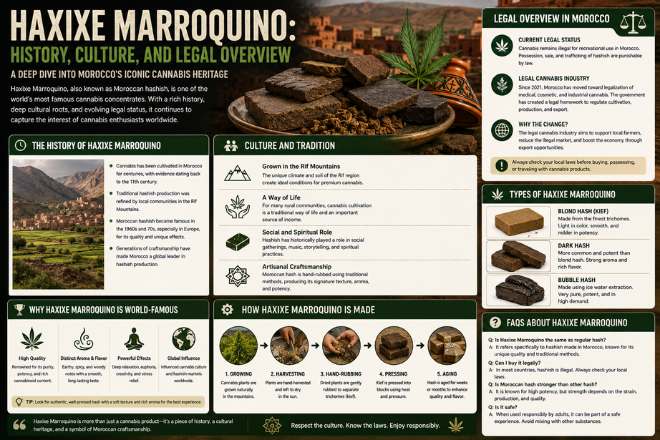
Haxixe marroquino, or Moroccan hashish, has been associated with parts of Morocco for decades and is often discussed in relation to the country’s history, agriculture, and international drug policy. While it has received global attention, it is important to distinguish between its historical and cultural significance and the legal frameworks that govern cannabis products today.

This article provides an educational overview of Moroccan hashish, including its historical background, traditional production methods, and current legal context.

What Does “Haxixe Marroquino” Mean?

The Portuguese phrase haxixe marroquino translates to Moroccan hashish. Hashish is a cannabis-derived product made from the resin of the cannabis plant. Historically, Morocco has been one of the regions most commonly associated with its production.

Historical Background

Cannabis cultivation has existed in parts of North Africa for centuries. Over time, certain regions of Morocco became known internationally for cultivating cannabis and producing hashish, influencing local economies and attracting international attention.

Today, discussions about Moroccan hashish often focus on history, public policy, rural development, and changing legal frameworks.

Traditional Production

Historically, hashish production involved collecting resin from dried cannabis flowers using traditional methods. Modern production techniques and regulations vary widely depending on the country and legal environment.

Cultural and Economic Context

In some rural areas, cannabis cultivation has played an important economic role. Governments and policymakers have also explored ways to balance economic development, public health, and legal regulation.

The legal status of cannabis and cannabis-derived products differs greatly around the world. Some countries permit limited medical or industrial uses under regulation, while others prohibit possession, production, or sale.

Anyone researching this topic should consult official government sources for the laws that apply in their jurisdiction.

Common Misconceptions

  • All Moroccan hashish is the same.
    No. Production methods, quality, and composition have varied over time and by region.
  • Historical association means legal availability.
    No. Historical production does not determine the current legal status of cannabis products.
  • Product names guarantee authenticity.
    No. Names and branding alone are not reliable indicators of origin or quality.

常问问题

What does “haxixe marroquino” mean?

It is the Portuguese term for Moroccan hashish.

Why is Morocco associated with hashish?

Certain regions have historically been known for cannabis cultivation and hashish production.

Is cannabis legal everywhere in Morocco?

Cannabis laws and regulations have changed over time and differ depending on the activity involved. Always consult current official regulations.

Why is Moroccan hashish well known?

Its historical association with cannabis cultivation has made it one of the most recognized regional names internationally.

Do all products labeled “Moroccan” come from Morocco?

Not necessarily. Product names or marketing claims do not guarantee geographic origin.

Conclusion

The term haxixe marroquino is closely tied to Morocco’s agricultural and cultural history. Understanding the topic requires looking beyond popular reputation to consider historical context, changing regulations, and public policy. For accurate and up-to-date information, rely on reputable educational sources and official government guidance rather than marketing claims.

Leave a Comment

Your email address will not be published.

选择要显示的字段。其他字段将被隐藏。拖放即可重新排列顺序。
  • 图像
  • SKU
  • 等级
  • 价格
  • 库存
  • 可用性
  • 添加到购物车
  • 描述
  • 内容
  • 重量
  • 方面
  • 附加信息
点击外部即可隐藏比较栏
比较